
Court Gowns and the Language of Status
Our noble ladies are dressed in rich court gowns, the height of fashion in the 15th century. These garments are long and full, with sweeping sleeves and heavy skirts that trail elegantly as they move. A broad girdle belt defines the waist and shows off the volume and quality of the material – a clear signal of wealth, since fabric was one of the most valuable commodities of the time.

Every element of these gowns was designed to display status rather than serve practicality. The fabrics might include fine wool, velvet, or imported silk, dyed in deep, expensive hues that only the wealthy could afford. These were garments for admiration in courtly halls, not for work by the hearth. The more fabric, the deeper the colour, the greater the statement.
Headwear for that Finishing Touch
Nothing says “high fashion” quite like statement headwear. The towering, cone-shaped hennin, often depicted in medieval fairytales, was covered with flowing veils of silk or fine linen – as impractical as it was impressive.
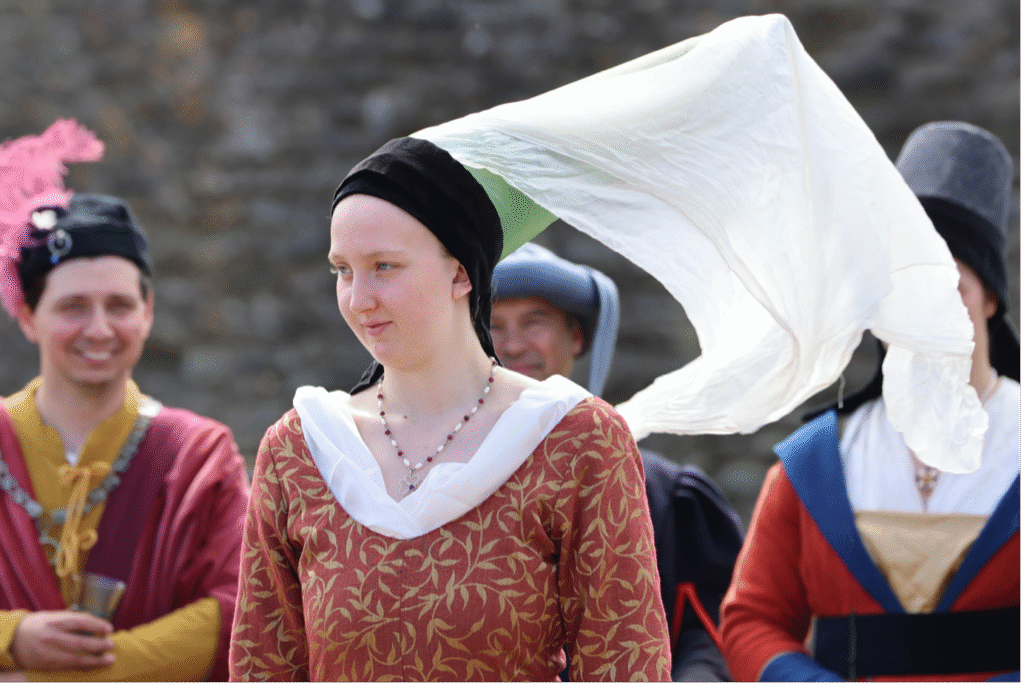
The Hennin was the ultimate statement headpiece (Image Credit: Cheltenham Media)
The English preferred a slightly shorter version known as the truncated hennin, or “flowerpot” style. Still grand, but a little easier to live with, it was the perfect balance of dignity and display. Such headwear instantly marked a lady as noble; her garments and accessories alike signalled that her hands were never meant for labour.
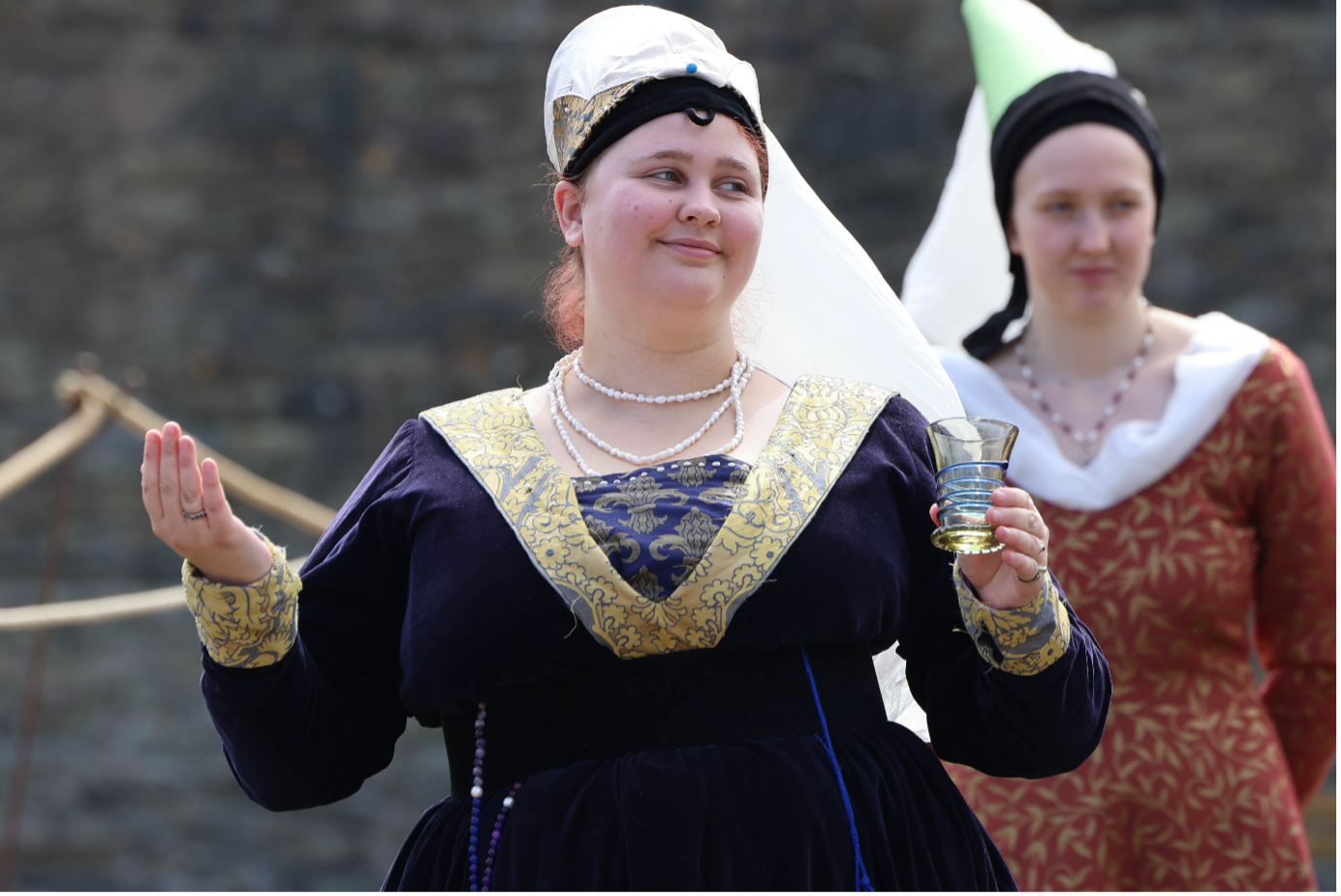
A noblewoman in the English truncated hennin (Image Credit: Cheltenham Media)
15th Century Noblemen
The gentlemen of rank were no less extravagant. The below gentleman stands out in his silk-covered brigandine – armour reinforced with hidden metal plates but clad in vibrant patterned silk. This combination of protection and splendour was the epitome of noble fashion, proving that even on the battlefield, status was never left behind.
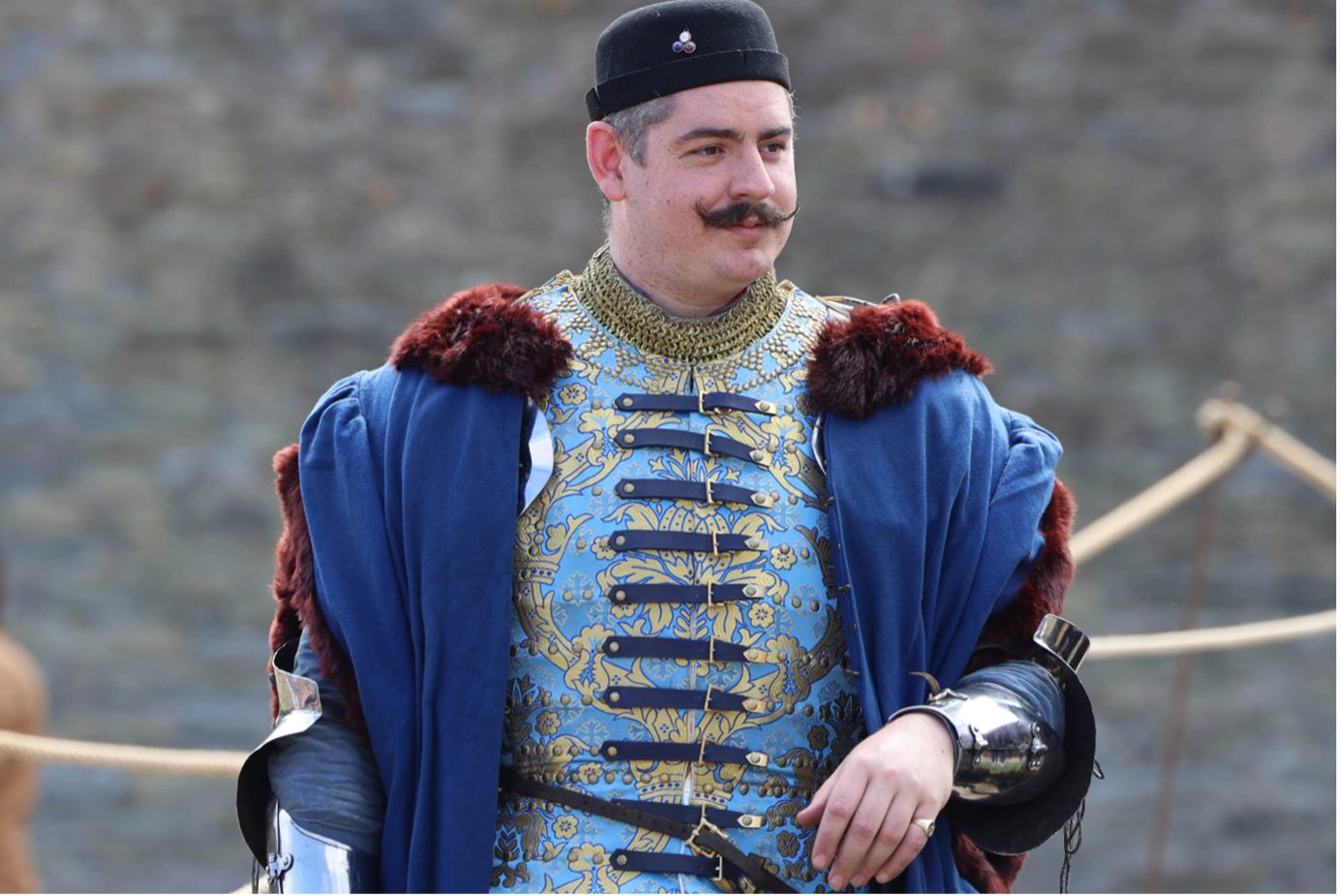
Silk-covered armour in full display of pomp and wealth (Image Credit – Cheltenham Media)
His gown is deliberately cut so that it does not close fully, revealing layer upon layer of costly fabric beneath. The sleeves are slashed high, almost to the shoulder, to display more silk; contrasting colours flash as he moves. Every choice, every stitch, is designed to draw the eye.
Fabrics, Colour, and Symbolism
At this level of society, silk was the ultimate status symbol. Imported through Italian merchants and traded along long routes from the East, it was staggeringly expensive. The elite could afford not just silk garments, but entire layers of them – silk linings, silk sleeves, even silk-covered armour.

Rich colours, fabrics and furs (Image Credit: Cheltenham Media)
Fur also made a statement, its type and origin carrying meaning. Squirrel, ermine, and marten were among the favourites, their cost determined by rarity and softness. A flash of fur at the collar or cuffs spoke volumes about wealth and refinement.
And then there was colour. The richest dyes: deep crimson, indigo, and black were the hardest and most expensive to produce. Wearing these shades was like wearing jewels in fabric form. To medieval eyes, the darker and more intense your colour, the higher your social standing.
So concludes our journey through 15th Century fashion at Ludlow Castle. Thank you for joining – we hope you’ve enjoyed this glimpse into how people once expressed power, pride, and personality – all woven through the clothes they wore.
A huge thank you goes to The Beaufort Companye whose demonstrations of authentic costumes have brought that world to life. We hope to welcome them back to Ludlow Castle in 2026 – watch this space!